As usual, Patrick V digs in to find the truly interesting parts of the matter, about a move that most would have ignored.
Sony has just put a hundred million dollars into Cosm, the most revealing move any Hollywood studio has made all year. Part one of two: what a ‘shared-reality’ venue actually is.
JUL 04, 2026
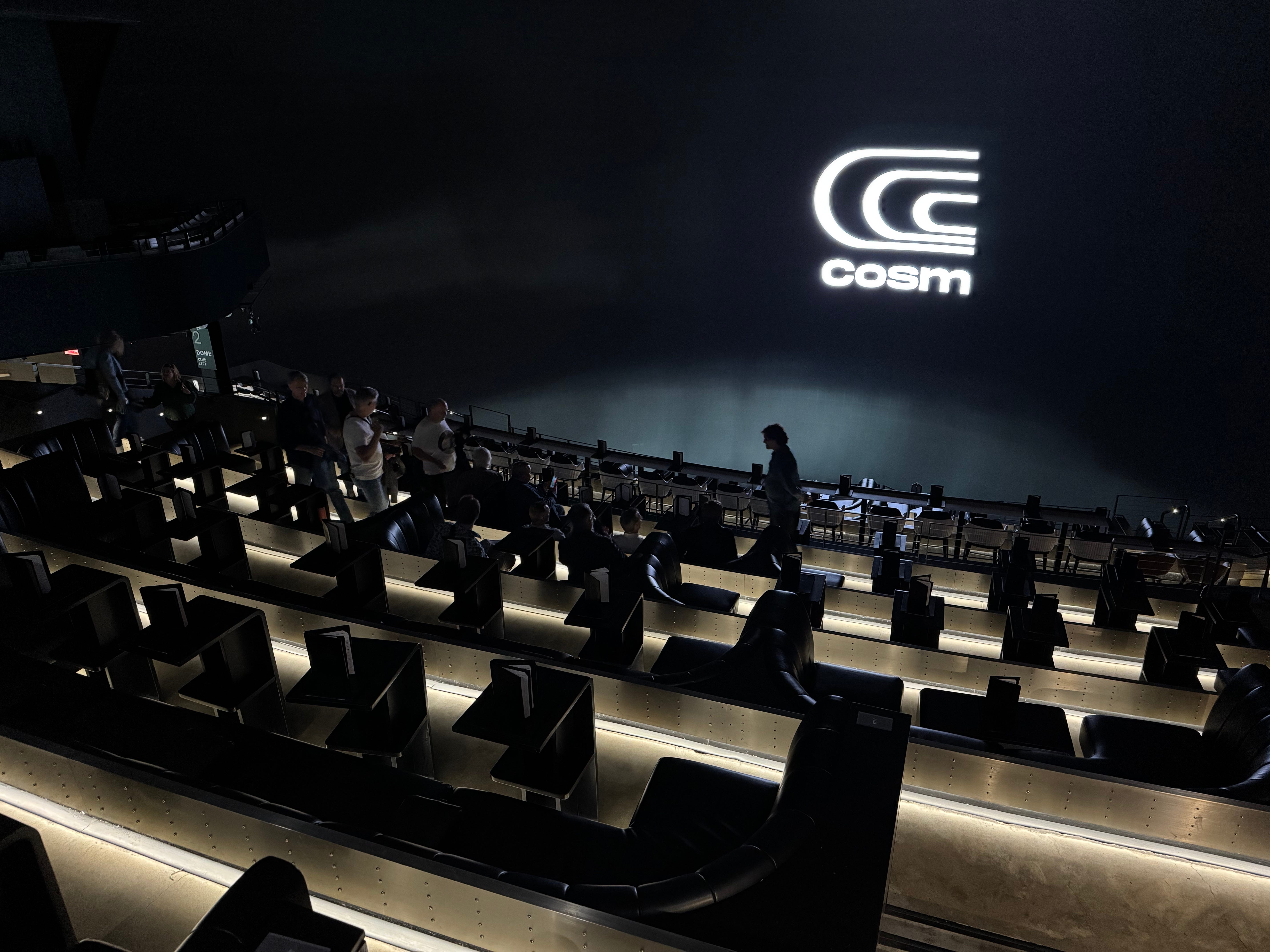
Sony Pictures has put a hundred million dollars into Cosm, the immersive “shared reality” venue operator, taking a minority stake and placing its chief executive Ravi Ahuja on the company’s board. It is the studio’s latest step into experiential entertainment, following its acquisition of the Alamo Drafthouse cinema chain in 2024, and on the face of it, it is a small cheque for a company of Sony’s size. It is also, I think, the most revealing thing a Hollywood studio has done all year. To understand why, it helps to have stood inside one of these places. So let me start there.
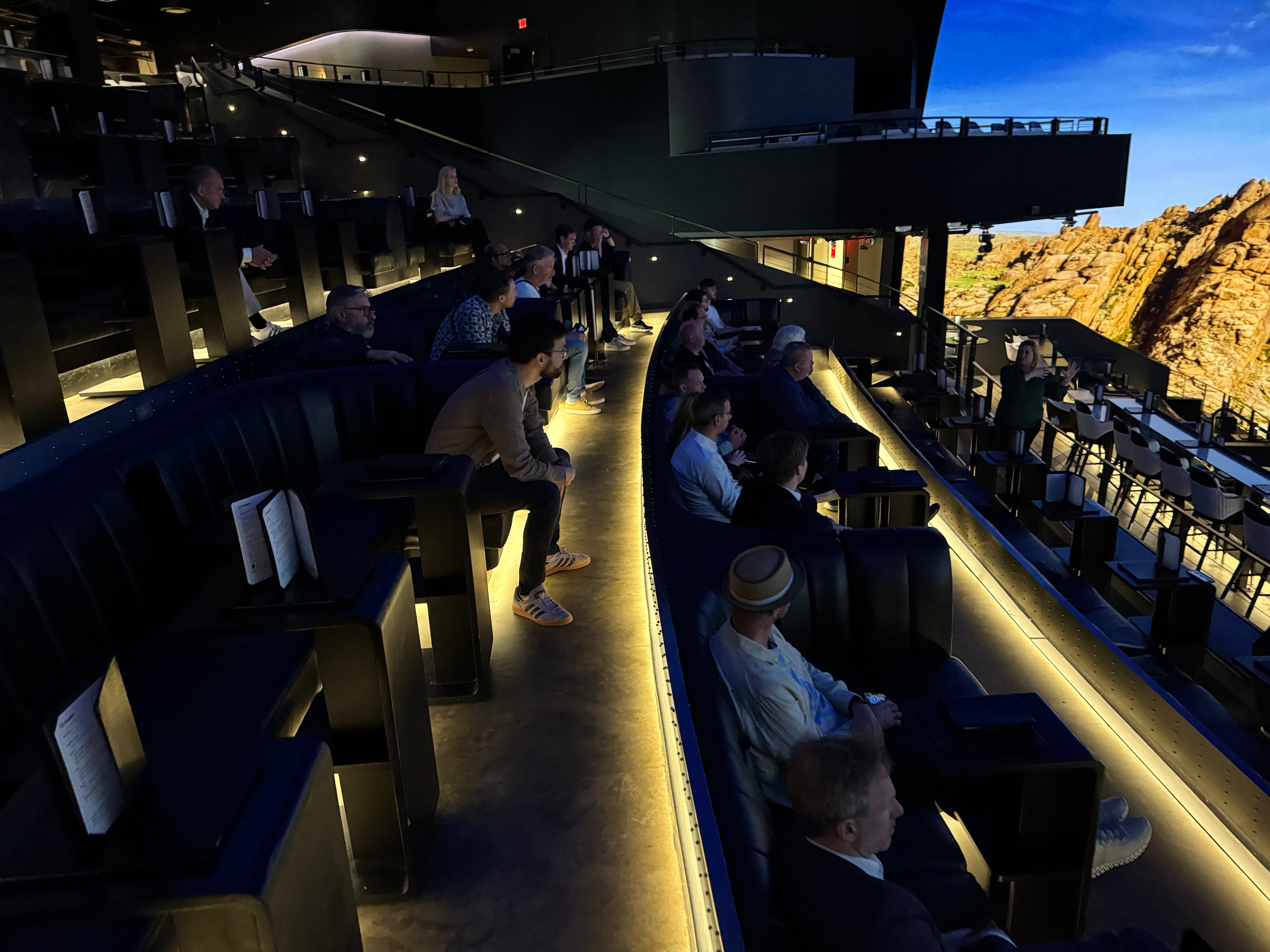
I first came across Cosm earlier this year, as the first stop on the EDCF tour of Los Angeles in early April, the week before CinemaCon. I had not seen it before and had read almost nothing about it, which turned out to be the ideal way to arrive. I was, to use the technical industry term, blown away.
The honest test of any venue is what it does to someone who is not its target customer. I am not a sports fan. And yet, standing inside the dome, I realised at once that I would happily sit through any match, in any sport, purely for the thing itself. The film screenings they then walked us through, The Matrix, Harry Potter, Charlie and the Chocolate Factory, looked more astonishing still. I walked out thinking about it for the rest of the week and the following week at CinemaCon, which is not something I usually do after visits to a converted corner of a stadium car park.Subscribe
So before we get to why Sony wrote that cheque, it is worth explaining what Cosm actually is, because a surprising number of people in the exhibition industry still have not seen one.
What Cosm actually is
Cosm calls itself a “shared reality” venue, and the distinction matters. This is not virtual reality. There are no goggles, no headset, no strapping a toaster to your face. You walk in, you sit down, and the world arrives.Entertainment is… everywhere!
The centrepiece is a wraparound LED dome, eighty-seven feet across and rendered at 12K, that fills your entire field of vision. There are no edges to remind you that you are looking at a screen. For live sport, and this is the part that does the heavy lifting, Cosm places its own cameras inside the stadium and marries that exclusive footage to the broadcast audio, so the sensation is not of watching a match but of sitting pitchside at one. It is, as their content team puts it, the communal passion of the stadium fused with the familiarity of the broadcast.
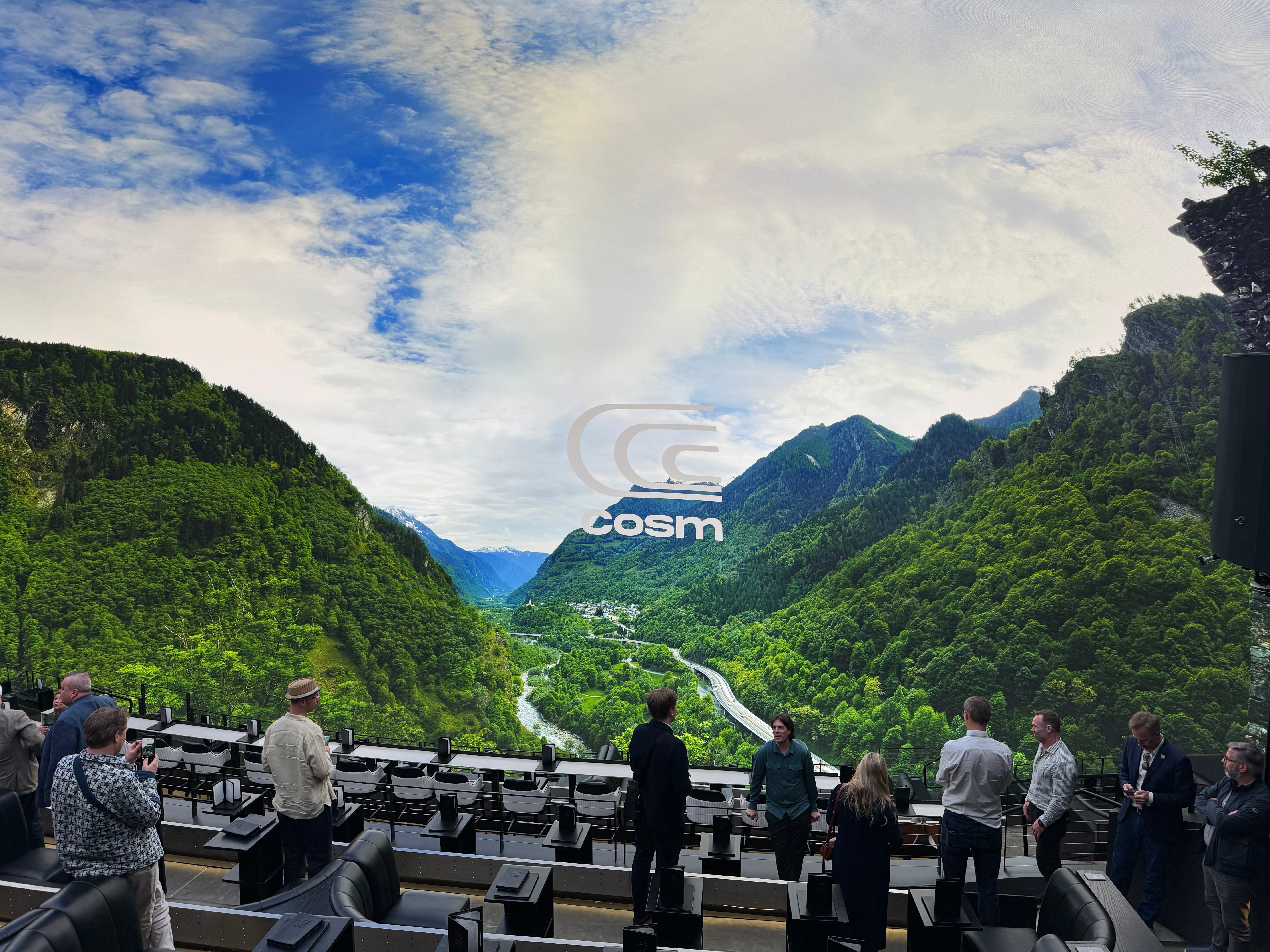
Each venue is really three experiences under one roof. The Dome is the immersive part. The Hall, just outside it, is a two-storey sports bar with a wall-to-wall LED wall showing the ordinary linear broadcast. The Deck is where you eat and drink. There are three venues open today, at Hollywood Park in Inglewood, in Dallas, and in Atlanta, which only opened a few weeks ago with an NBA Finals game. Detroit and Cleveland are next. International expansion beckons after that.
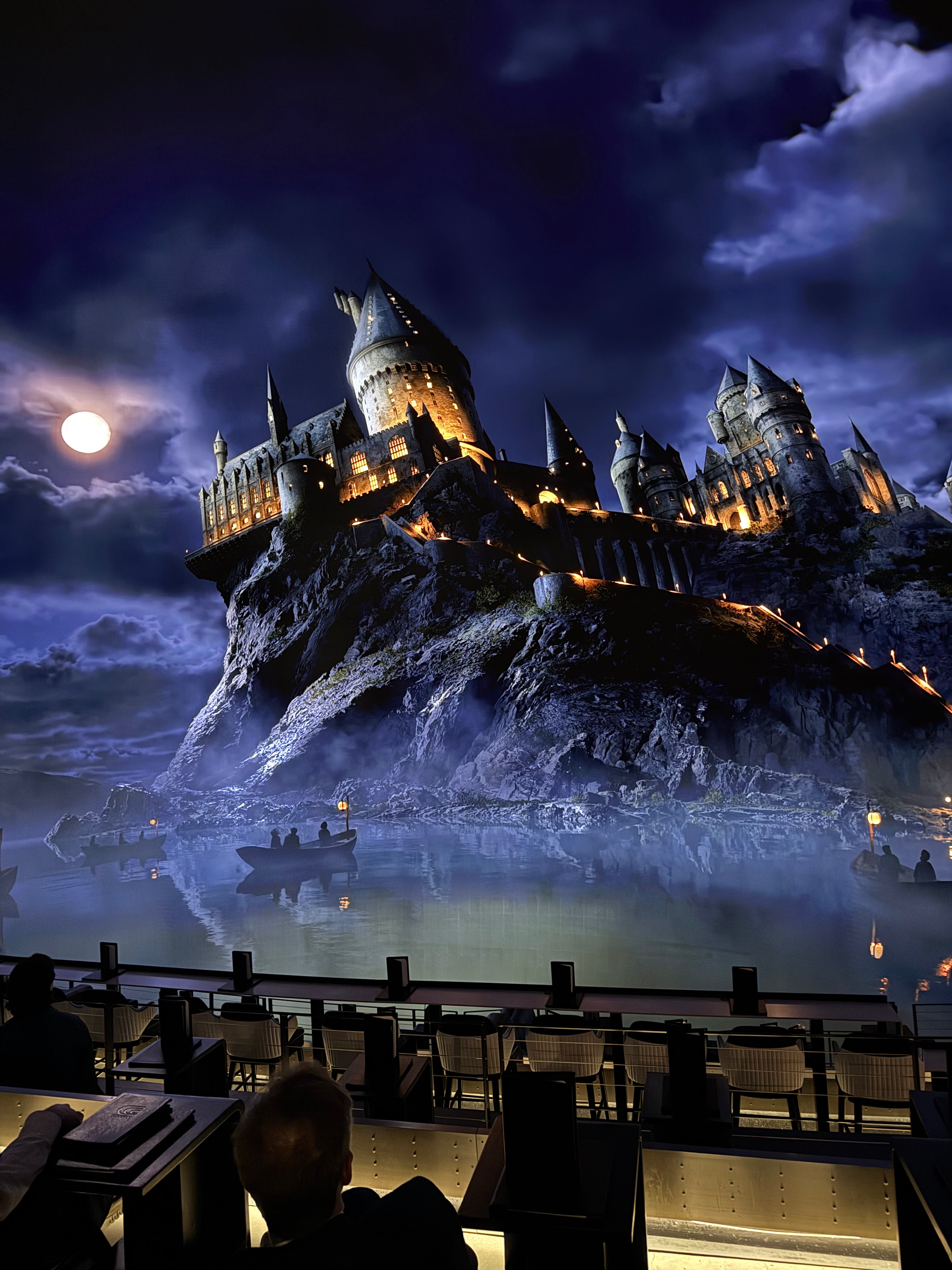
The programming skews to sport, but it is not only sport. There have been Cirque du Soleil shows and a run of Warner Bros. film screenings, including Harry Potter and the Sorcerer’s Stone dressed up for its twenty-fifth anniversary. Hold that detail. We will need it tomorrow.
Where it sits, and why “virtual reality” is the wrong label
The lazy way to describe Cosm is as a smaller Sphere. The more useful way is to place it on a line between two things it is not.
At one end is the Sphere in Las Vegas. Sphere is a magnificent, exclusive, capital-crushing monolith. It cost well over two billion dollars, and its second building, in Abu Dhabi, is a 1.7 billion dollar project funded by Abu Dhabi itself and not due to open until the end of 2029. The next American venue, near Washington D.C., is a deliberately smaller format. Read that sequence carefully, because it tells a story. Sphere’s own answer to the problem of scaling is to shrink. The round monolith does not replicate, and its operators know it.
At the other end of the line is the sports bar. Cheap, everywhere, and welded to whatever the broadcaster happens to be showing.
Cosm sits precisely between the two, and takes the best of each. It is a fraction of the cost of a Sphere and built to be repeated, three venues and counting, which is the inclusive, scalable model to Sphere’s exclusive one. But it is a very long way above a sports bar, because it owns exclusive footage and an environment nobody can pirate. Where Sphere is migrating down towards Cosm’s economics from the top, Cosm is already sitting at the size that works.
There is a third comparator worth adding, because it comes from my own corner of the world (geographically and culturally). ABBA Voyage in East London is the other great experiential success of the decade, and it rhymes with Cosm in ways that are easy to miss. The ABBA Arena is a fully demountable building, designed from the outset to be picked up and moved to another city. The show has drawn more than four million visitors, and its producers are openly exploring versions in the United States and Germany. Like Cosm, and this is the point, it is emphatically not virtual reality. It is captured reality, ILM-rendered avatars (ABBA-tars, if you will) of the band as they looked in 1979, presented on a giant surface to a room full of people. The avatar-residency format is now being treated as portable, repeatable intellectual property, and it will not stay an ABBA exclusive for long. The Beatles? Michael Jackson? Wham?
Which brings us to the label problem. Some of the coverage of Cosm, and of the Sony deal, has reached reflexively for the phrase “virtual reality.” It is the wrong phrase. Virtual reality, the isolating, goggle-strapped kind, has largely failed. Even Meta has scaled back its ambitions. What has actually worked, at Sphere, at Cosm, at the ABBA Arena, is shared reality, the communal kind, where the spectacle is enormous and you experience it in a room full of other human beings that you can see. Calling that virtual reality is not a small slip. It mistakes the thing that failed for the thing that is working.
The rights question, answered by the World Cup
The obvious worry about a venue that shows live sport is rights. Does this threaten the broadcasters? The clearest answer is playing out on Cosm’s own screens this summer.
Cosm has struck a deal with FOX Sports and FIFA to show forty World Cup matches across its three venues, including all three United States group games and the final on the nineteenth of July. This is not a grey-market replay. Cosm is an official rights partner, positioning its own cameras at host stadiums and pairing them with the Fox feed. And remember the Hall, the two-storey sports bar bolted onto every venue, showing the ordinary broadcast on a giant wall.
So Cosm does not threaten broadcast rights any more than a sports bar does. It goes further than a sports bar, with negotiated camera access, but the direction of travel is additive. It drives the Fox broadcast rather than undercutting it, which is exactly why Fox is a partner and not a plaintiff.
The real question
This is the business, then. It turns live and library film content into a repeatable destination, cheaply, at a scale the megastructures cannot match, and it does so as a licensed friend of the broadcasters rather than a threat to them.
Which is all very well as a description of Cosm. It does not explain the hundred million dollars. Plenty of companies could have written that cheque. The interesting question is not why the money was welcome. It is why this particular studio wrote it.
Because Sony is the one Hollywood major that could not have been anyone else in this deal, and the reasons come down almost entirely to what Sony is not. No mass-market streaming service, in a town where everyone else has one. No American broadcast network, and no legal way to own one. No flagship theme park, and a very specific, faintly embarrassing reason it cannot build the obvious one. Line those absences up and they stop looking like weaknesses. They start to look like the outline of a strategy that no other studio is in a position to copy.
That is where we go tomorrow.
Part two, on why Sony and only Sony could make this move, and what “owning the room” actually means, follows tomorrow.
Thanks for reading Patrick’s Cinema Guru Substack! This post is public so feel free to share it.